
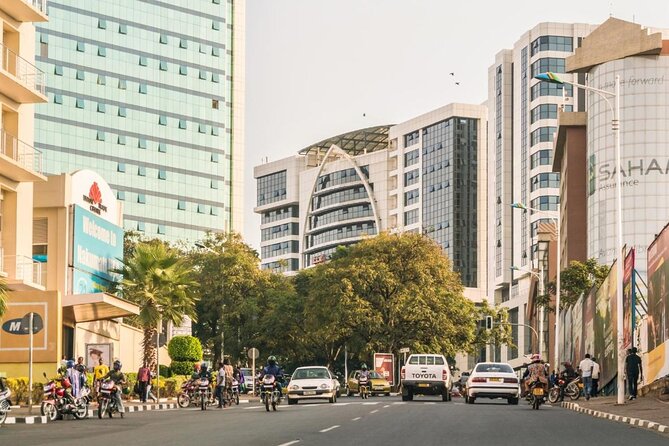
Reviewed · KIGALI TOURS
Kigali Walking Tour
Kigali reveals itself best in pieces, and this 2.5-hour walking tour links several of them: a working art center, a solemn memorial, a women’s project, a car-free food street, and an everyday market. You get a quick feel for how the city mixes memory, enterprise, food, and neighborhood life.
I like the way the route moves beyond postcard sights, and I like the chance to talk with a local guide such as Gloria or Shark about Kigali and Rwanda. The main consideration is that the tour’s value depends heavily on the guide: some departures offer lively conversation and useful context, while others may feel light on storytelling and major sights.
Key points at a glance
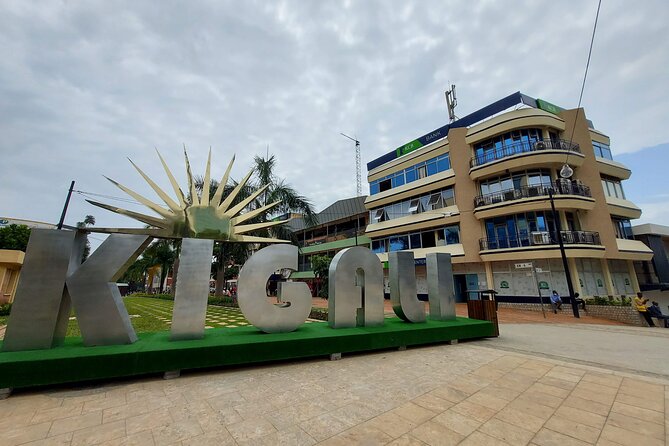
- Five very different stops: Art, genocide remembrance, social enterprise, local food, and shopping all fit into one short outing.
- Guides make the difference: Gloria has been praised for warm conversation, while Shark is noted for his enthusiasm for Kigali.
- A useful first-day orientation: You get practical suggestions for photos, food, neighborhoods, and the rest of your stay.
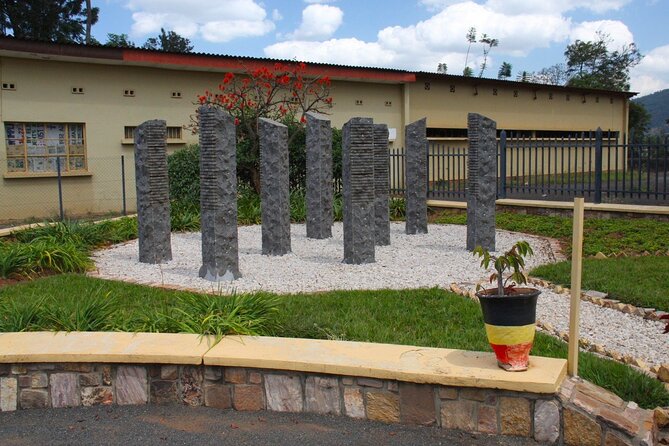
- The Belgian Peacekeepers Memorial adds serious context: This is not simply a sightseeing walk.
- City Market feels local rather than staged: Expect fruit, tea, coffee, honey, household goods, and food, not a souvenir-only bazaar.
- The route is not a parade of grand monuments: If you want famous buildings and long historical talks, this may feel too modest.
What this Kigali walk is really designed to do

This is best understood as an introduction to Kigali rather than a traditional monument tour. In two and a half hours, you move through several parts of the city and see how Kigali functions today. The route does not rest on one spectacular sight. Instead, it builds a picture from smaller encounters.
That approach suits you if you are arriving in Kigali for the first time and want help getting your bearings. A local guide can point out places to eat, good photo spots, cultural centers, and areas worth returning to on your own.
The tour is listed at $30 per person, with bottled water included. That is fair if you value a local introduction and good conversation. It is less convincing if you expect entry into major paid attractions or a long, polished lecture at every stop. All listed stops have free admission, so you are paying mainly for the guide, planning, local context, and the convenience of connecting several areas in one outing.
The group can reach 50 people, which is a large possible maximum for a walking tour. Some departures have been small and personal, but you should not assume every date will have that feel. A smaller group makes it easier to ask questions and stay close to the guide, while a larger one can make street crossings and conversation less smooth.
More walking tours in Kigali:
- Kigali: Walking Tour with a Local Guide
★ 4.9 · 234 reviews - Rwanda Half-Day Walking Food Tour
★ 5.0 · 35 reviews - 1 Day Canopy Walk Adventure in Nyungwe Forest National Park
★ 5.0 · 32 reviews
Starting at Kigali Heights
The meeting point is Kigali Heights on KG 7 Avenue. The supplied booking information gives a 10:00 am start, while the tour is also described as offering morning or afternoon departures. Check the exact option shown for your date when booking.
Starting here gives the walk a clear city-center reference point. You will want comfortable shoes, a little room in your schedule, and a willingness to walk between stops rather than simply step off a bus at each attraction. Bottled water is included, but coffee and tea are not.
The tour ends downtown at the stated location, 3345+V23, Kigali. That is useful because you can continue exploring after the walk instead of returning to the starting point. Since the route includes food and market areas, you may also want to carry a little local currency if you decide to buy something along the way.
Ivuka Arts: a quick look at Kigali’s creative side
The first stop is Ivuka Arts Kigali, an art center and gallery. You have about 20 minutes here, with no admission charge.
This is a smart opening stop because it gives the tour an immediate cultural angle. Kigali is not presented only through government buildings or memorial sites. You see a place where artists work and display their pieces, and your guide can help explain how the center fits into the city’s creative life.
Twenty minutes is enough for an introduction and a look around, but not enough for a detailed gallery visit. If you are passionate about contemporary African art, you may wish to ask whether you can return later or spend more time there independently.
The short stop also tells you something about the overall pace. This is a sampler. You will touch several subjects, but none receives a full afternoon.
Belgian Peacekeepers Memorial: the walk’s most serious stop

The Belgian Peacekeepers Memorial is the emotional center of the route. You spend about 30 minutes at the site where ten Belgian United Nations peacekeepers were murdered by Hutu extremists. Their deaths helped provoke the withdrawal of United Nations forces and cleared the way for the genocide to unfold on a much larger scale.
This stop requires a different pace from the art center and market. It is a place for listening, reflection, and careful questions. The memorial connects a specific event to the wider story of Rwanda’s 1994 genocide, though the tour’s length means you should not expect a full memorial museum experience.
This is one of the places where guide quality matters most. A good explanation can help you understand why the peacekeepers were targeted and how their deaths affected what followed. If your guide stays mostly at the level of basic facts, the stop may feel brief.
I appreciate that the itinerary does not treat Kigali as a cheerful city break detached from its past. The memorial gives necessary weight to the day. At the same time, the route also shows present-day Rwanda, so the tour does not become only a lesson in tragedy.
A few more Kigali days to weigh up
- Kigali City Tour
★ 5.0 · 452 reviews - One-day Akagera National Park Game Drive with a Choice 4×4
★ 5.0 · 105 reviews - Private Full-day Kigali City Tour with Pickup and Lunch
★ 5.0 · 79 reviews - Kigali E-Bike City Tour with Breakfast
★ 4.9 · 73 reviews
Nyamirambo Women’s Center and the work behind it
Next comes the Nyamirambo Women’s Center, usually known as NWC. You have roughly 30 minutes here.
The center began in late 2007, founded by 18 Rwandan women living in Nyamirambo. Its work addresses gender-based violence, gender inequality, and discrimination. Today, its stated mission includes education and vocational training for women who cannot afford such training, helping them gain better employment opportunities.
This stop adds social context that you will not get from a simple city highlights bus ride. You are not just looking at a building. You are learning about a local organization built by women in the neighborhood and focused on practical opportunities.
Do not expect a long workshop unless your particular departure includes one. The available timing suggests a short visit and explanation. Still, it is a useful stop because it connects Kigali’s streets with the daily work of community organizations.
Nyamirambo itself is one of the city’s cultural hubs, and the center offers a reason to pay attention to the neighborhood rather than pass through it. Ask your guide about the area, local food, and what you can safely explore later. The tour promises personalized tips, and this is a good moment to request them.
Biryogo: food, color, and a car-free street
The route then reaches Biryogo, described as a colorful, car-free zone and a central point of the city. You get about 30 minutes here.
Biryogo is known for a mix of cultures and foods. It is the kind of stop that helps you read Kigali through ordinary life: people moving around without traffic on the street, food being prepared and shared, and different local influences meeting in one neighborhood.
This is a good place for photographs, but remember that the stop is about atmosphere rather than a single monument. Your guide can help you understand what makes the area important and point out places you might revisit for a meal.
The tour information does not promise a food tasting, so do not book this expecting lunch to be included. If you want to eat or drink, plan to pay separately. A little extra time after the walk may be useful if Biryogo interests you.
The city can feel calm and orderly in some areas, but this stop gives you a more social and street-level view. That contrast is part of the tour’s appeal.
Kigali City Market: the most everyday experience
The final listed stop is Kigali City Market, with about 30 minutes set aside. This is a working market, not a display built only for sightseeing.
The lower level has vendors selling food and household items. Upper levels are described as more like a shopping mall. You might find fruit, tea, coffee, honey, and places to eat or drink, along with a wide range of ordinary goods.
I like this stop because it gives you a chance to see how people shop in Kigali. The market is not focused on curios or souvenir stalls, so you may find it more useful than a tourist bazaar if you want coffee, honey, tea, or fresh produce.
The sellers are described as engaging without excessive pressure. Photography is generally easy, and prices are considered reasonable, with limited room for bargaining. That means you should not expect every purchase to become a long negotiation. Ask before taking close-up pictures of people or products, even if the general atmosphere feels relaxed.
The market is described as safe, well lit, and well secured, and you do not necessarily need a guide to explore it on your own. That is worth knowing. The guide adds context and helps connect the market to the rest of the walk, but this is also a stop you could revisit independently.
Thirty minutes can pass quickly here. If you enjoy markets, you may wish to return later with more time and money for browsing.
What the guides add, and where the tour can fall short
The strongest praise goes to the guides’ attitude and personal connection. Gloria is noted for being friendly, intelligent, and good at conversation. Shark is described as enthusiastic about Kigali and able to make a small group feel personal.
That does not mean every departure will have the same style. Some feedback points to a lack of stories and historical detail, and one particularly negative experience found the guide had little to offer. Other departures have been called informative, pleasant, and well organized.
That range matters. The tour is local-led, so the guide is not a small detail. You are buying access to a person who can interpret the city, answer questions, and adjust the emphasis to your interests.
External events can also affect the route. During the Tour de Rwanda, city movements and the planned path were changed. That kind of event is outside the operator’s control, but it shows why the exact experience may vary from one date to another.
The supplied rating is 4.6 out of 5 from 78 reviews, with 90 percent recommending the experience. That is a strong overall result, but the mixed comments point to a clear lesson: book this for local orientation and conversation, not for guaranteed expert-level storytelling at every stop.
Walking pace, transport, and practical comfort
The experience is presented as a walking tour, but one departure included enjoyable motorcycle rides. Do not treat those rides as a guaranteed feature. The core route is still a city walk connecting the five named stops.
The total time is about two hours and 30 minutes. That is long enough to feel useful without taking over your day, though the number of stops means the pace may be brisk. You will spend time walking, standing, listening, and moving through public areas.
The tour is near public transportation, and most people can participate. The maximum group size is 50. Mobile ticketing makes arrival simple, and confirmation is provided at booking.
The best time to use it is early in your Kigali stay. You can then act on the guide’s suggestions for meals, markets, photo locations, and neighborhoods. If you take it near the end of your visit, it may still be enjoyable, but some practical advice will arrive too late to use.
Cancellation is free if you cancel at least 24 hours before the local start time. Changes or cancellations inside that window are not accepted for a refund.
Who will get the most from this tour
I would choose this walk if you are visiting Kigali for the first time and want a broad introduction in one morning or afternoon. It is especially useful if you prefer neighborhoods, markets, and community projects to a list of grand buildings.
It also suits you if you enjoy asking questions. The best moments are likely to come from conversation with the guide, particularly if you want help understanding present-day Rwanda alongside its painful past.
You may want something else if you are looking for a tightly scripted history tour, a long museum visit, or a route packed with famous architectural sights. One criticism of the experience was that there were few significant landmarks. That is fair. The tour’s attractions are meaningful, but they are not all visually dramatic.
Families and most able-bodied participants can take part according to the supplied information. Still, the walking format and large possible group size mean you should consider your comfort with city streets and standing for extended periods.
Should you book the Kigali Walking Tour?
Book it if you want a friendly first look at Kigali, especially through art, neighborhoods, food culture, community work, and a working market. The Belgian Peacekeepers Memorial also gives the route needed historical seriousness.
At $30, I see solid value when you get a guide like Gloria or Shark who brings stories, warmth, and practical advice. I would be more cautious if your main goal is landmark sightseeing or a detailed academic account of Rwanda’s past.
My best advice is to take it near the beginning of your stay, ask questions early, and treat the itinerary as a starting map rather than a final word on Kigali. You may leave with fewer grand sights than expected, but a better sense of where to go next and how the city fits together.
FAQ
How long does the Kigali Walking Tour last?
The tour lasts approximately two hours and 30 minutes.
How much does the tour cost?
The listed price is $30 per person.
Where does the tour start and end?
It starts at Kigali Heights, KG 7 Avenue, Kigali, Rwanda. It ends downtown at 3345+V23, Kigali, Rwanda.
What time does the tour start?
The supplied booking details show a 10:00 am start. The experience is also described as offering morning or afternoon departure options, so check the time available for your chosen date.
What stops are included?
The route includes Ivuka Arts Kigali, the Belgian Peacekeepers Memorial, Nyamirambo Women’s Center, Biryogo, and Kigali City Market.
Is anything included in the price?
Bottled water is included. Coffee and tea are not included.
Can I cancel for a full refund?
Yes. You can cancel at least 24 hours before the local start time for a full refund. Cancellations or changes made less than 24 hours before the start are not accepted for a refund.
Just added around Kigali
- From Kigali: 8 Hour Day-trip Lake Kivu Cruise Experience★ 4.5 · 3 reviews
- Kigali City Tour and Sightseeing★ 5.0 · 3 reviews
- 3-Day Rwanda Gorilla Safari★ 4.5 · 3 reviews
- Home staying experience★ 5.0 · 3 reviews
- 2 Days Gorilla Trekking Rwanda★ 5.0 · 3 reviews
- 1 Day Gorilla Trekking Safari in Rwanda Volcanoes National Park★ 5.0 · 3 reviews
- Kigali: Guided City Tour let us learn, enjoy together ❤️★ 3.6 · 3 reviews
- Private Memorial Day Tour Ntarama and Nyamata★ 5.0 · 3 reviews
Kigali Tours, compared.



One-day Akagera National Park Game Drive with a Choice 4×4
Read our review →
Private Full-day Kigali City Tour with Pickup and Lunch
Read our review →

Private 1 Day Akagera Big Five Safari with pick up and lunch.
Read our review →
Mount Kigali and Cultural Village Tour with Snacks
Read our review →
Kigali: Traditional Coffee Experience ( Bean to Brew)
Read our review →Browse the lists this tour appears in