
Reviewed · KIGALI TOURS
A Day in the Life of a Local Artisan
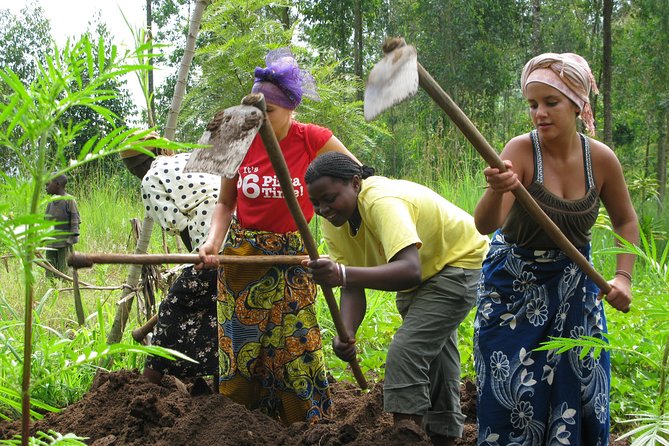
The most rewarding part of this Kigali-area experience is the chance to work beside a Rwandan family or women’s cooperative instead of simply watching village life from a vehicle. You may hoe a field, fetch water, help prepare cassava and beans, share stories over lunch, and learn to weave a small sisal item.
I like the small group limit of six, which gives you time for real conversation and patient instruction. I also like that your $90 covers lunch, bottled water, a guide, gratuities, and transport from Muhanga Town to the village. The main consideration is logistics: transport from Kigali costs extra, and the day includes uneven surfaces and hands-on chores, so you should be ready for a moderately active outing.
Key points to know before you book
- You take part in daily work: Expect farming, water collection, food preparation, and possibly cutting grass for cows.
- Lunch is simple and local: The family prepares vegetarian food such as cassava and beans, using the sort of meal they normally eat.
- Sisal weaving gets proper time: The final lesson lasts about two hours and focuses on making a simple item.
- The group stays small: No more than six people participate, allowing more personal help and conversation.
- Kigali transport is extra: The listed return transport begins in Muhanga Town, at NR1 in Gitarama.
- The human exchange matters: Hosts may ask about your life, while you learn about work, family, and community life in rural Rwanda.
From Kigali to a rural community near Muhanga
This is not a quick city sightseeing trip. The listed meeting point is on NR1 in Gitarama, now commonly associated with Muhanga, and the village transport included in the price begins there. If you are staying in Kigali, ask Azizi Life to arrange pickup before booking, since transport from Kigali costs an additional fee.
The day is planned for about eight hours. The stated operating window begins between 8 and 11 a.m., but that information is broad enough that you should confirm your exact start time. One account describes an early pickup at 7:45, so morning departures are possible.
The drive is part of the change in pace. Kigali gives way to rural surroundings, and the experience shifts from sightseeing to participation. A guide or interpreter helps connect you with the host family or cooperative, which is important when conversations move beyond basic instructions.
The group size makes a real difference here. With only up to six people, you are less likely to feel like a crowd arriving at someone’s home. You can ask questions, take your turn with each task, and receive direct help during the craft lesson.
A few more Kigali days to weigh up
- Kigali City Tour
★ 5.0 · 452 reviews - Kigali: Walking Tour with a Local Guide
★ 4.9 · 234 reviews - One-day Akagera National Park Game Drive with a Choice 4×4
★ 5.0 · 105 reviews
Meeting the artisan family and starting with farm work
At Azizi Life Experiences, you begin with a briefing before continuing to the village. You are welcomed by artisan partners, who introduce you to the work that fills an ordinary day.
The first tasks can include hoeing a field or planting crops. You might also help with gathering grass for cows. These jobs are straightforward, but they are physical, and they give you a better sense of how much effort goes into everyday food and household work.
I appreciate this hands-on approach because it avoids turning rural life into a stage show. You are not simply shown a finished basket or told that farming is important. You hold the tool, work the soil, and see how chores fit together.
Still, keep your expectations sensible. This is a cultural exchange, not a farm skills course. The exact work may vary with the season and the needs of the household. Wear clothes and shoes that can handle dirt, sun, and uneven ground, and expect a moderate level of physical activity.
The hosts’ patience is one of the reasons this experience suits first-time visitors. People who have never farmed or carried water can try the tasks at a comfortable pace, with guidance close at hand.
Fetching water and sharing household work
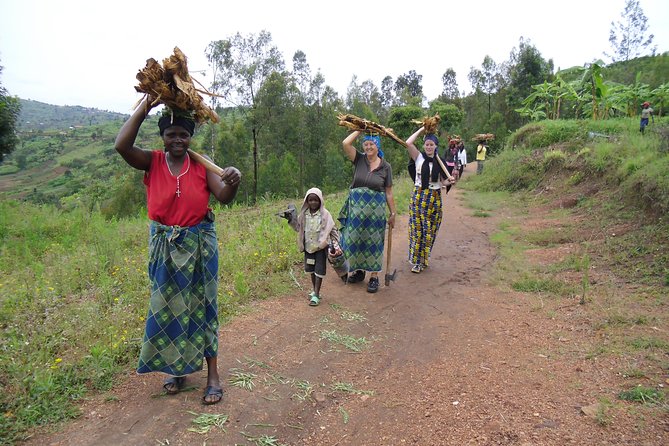
Fetching water is another central part of the day. Walking with local hosts to collect water gives you a practical glimpse into a chore that is easy to overlook when you turn on a tap at home.
You should not treat this as a stunt or a photo opportunity. The value is in walking alongside the people who do this work as part of daily life, listening to their stories, and noticing how household tasks are shared.
Food preparation follows, with the chance to help make lunch. This is a useful bridge between work and conversation. You are not just eating a dish placed in front of you. You can see some of the steps involved in preparing a normal family meal.
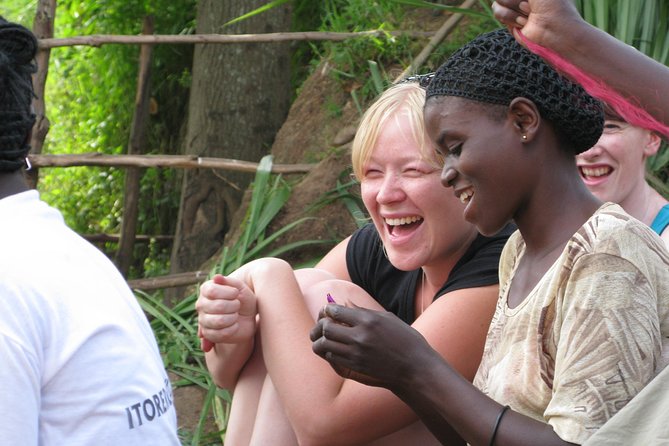
Some accounts of the experience also include singing, dancing, laughter, and time spent talking with the women of the cooperative. Those moments cannot be promised as a fixed performance, but they fit the welcoming, social nature of the visit.
The conversation may be as important as the chores. Hosts can ask about your home country, while you can ask about family life, work, farming, and the cooperative. An interpreter may stay beside you to help keep the exchange moving.
One useful point is that this setting can lead to serious conversation as well as cheerful moments. A guide named Richard was described as sharing family stories during the drive, including experiences connected to Rwanda’s 1994 genocide and the challenge of finding work. Such discussion should be approached with care and respect, but it can add real context to your time in the countryside.
A local vegetarian lunch with cassava and beans
Lunch is included, and it is prepared in the style the family would normally eat. The meal is vegetarian, with cassava and beans specifically noted. It is simple food, but that is part of its value.
You get a direct connection between the morning’s work and what appears on the table. After helping with farming or cooking, a plate of cassava and beans feels less like a restaurant sample and more like part of the household rhythm.
This is also the best time to sit down and talk. The scheduled lunch break lasts about an hour, giving you room to eat slowly and ask questions. Hosts may also be curious about you, so be prepared to share a little about your own home and daily life.
Do not book this expecting a broad menu or a formal dining setting. The point is to eat what the family normally prepares, and the menu may be modest. If you have dietary restrictions, ask about them before the day begins.
Bottled water is included. Even so, bring your own refillable bottle if you use one, along with sun protection. The combination of walking, chores, and a full day outside can be tiring.
Same base, a completely different day out:
- Private Full-day Kigali City Tour with Pickup and Lunch
★ 5.0 · 79 reviews - Kigali Walking Tour
★ 4.5 · 78 reviews - Kigali E-Bike City Tour with Breakfast
★ 4.9 · 73 reviews - Private 1 Day Akagera Big Five Safari with pick up and lunch.
★ 5.0 · 72 reviews
Two hours learning to weave with sisal
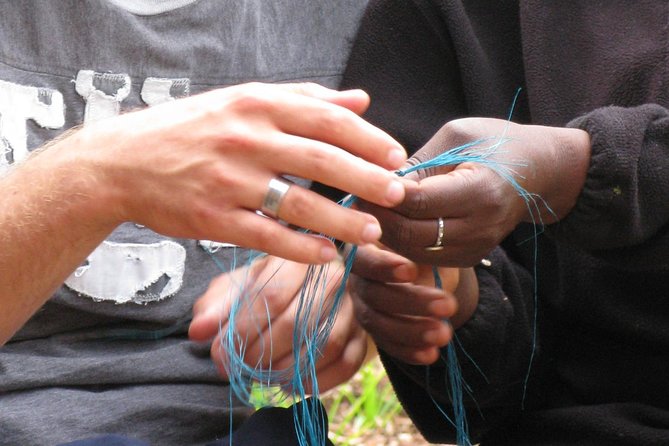
The final major activity is a two-hour, one-to-one weaving lesson. You learn to make a simple item from sisal, a plant fiber widely used in Rwandan handicrafts.
This is where the experience becomes more than a village visit. You leave with an understanding of the patience, repetition, and hand skill behind the baskets, jewelry, and other woven goods sold by artisan cooperatives.
The one-to-one format is a strong feature. Weaving can look easy when you see a finished piece, but shaping and tightening the fiber takes coordination. Having an instructor beside you gives you time to correct your technique instead of rushing through a group demonstration.
You may produce a small item rather than a polished market piece. That is fine. The point is to learn the process and appreciate the labor behind handmade goods.
The craft lesson also gives you a quieter close to the day. After farming, walking, collecting water, and lunch, two hours at the weaving station let you focus on one skill and continue the conversation.
The activity information centers on sisal weaving, but Azizi Life also works with artisans who make different crafts. One artisan experience connected a visitor with a skilled potter, including collecting clay from a nearby river and making an object of choice. That pottery activity is not promised in this booking, so treat it as an example of the wider artisan program, not as part of this exact day.
Buying handicrafts and supporting the cooperative
You have time to purchase handmade items at the gift shop before leaving. These purchases are not included in the $90 price, so bring extra money if you want a basket, piece of jewelry, or another craft.
Buying directly from the cooperative can be a meaningful way to support the people you have met. It also gives you a useful souvenir with a clear connection to the day, rather than a generic item from an airport shop.
Still, shopping is optional. You do not need to buy anything to take part in the experience, and the strongest part of the day is the time spent working and talking with the hosts.
The atmosphere is family-friendly, and the experience has also worked well for groups of older teenagers. Children must be accompanied by an adult, and the special child rate applies only when sharing with two paying adults.
What the $90 price really includes
At $90 per person, the experience offers reasonable value if you want a full day with local hosts rather than a short craft demonstration. The price includes a local guide, tour host, lunch, bottled water, gratuities, and return transport from Muhanga Town to the village.
That list matters. A full-day private activity with a maximum of six people can otherwise become expensive once you add food, village transport, and tips. Here, those costs are bundled into the booking price.
The weak spot is the starting point. If you are based in Kigali, you must arrange and pay for the extra transfer to Muhanga Town. This can change the total cost and the ease of the day, so ask for the Kigali pickup price before you commit.
The experience is described as private, meaning only your group participates. That is particularly useful for families, couples, school groups, or anyone who wants a quieter exchange with the hosts.
Group discounts are available. If you are traveling with several friends or arranging a student group, ask for the current terms. The minimum booking is two people, so solo visitors cannot book this activity alone under the stated conditions.
Who will enjoy this day most
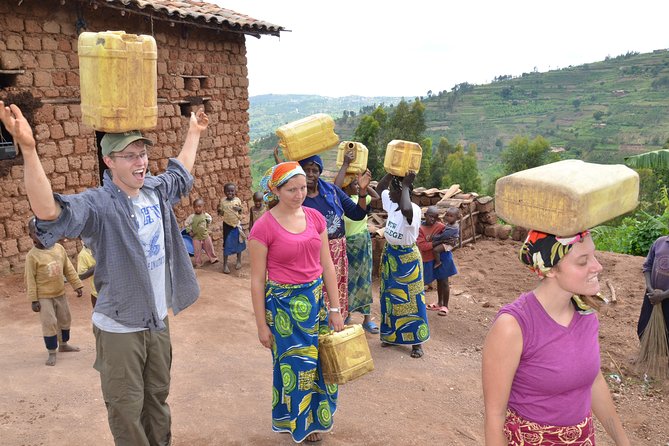
I would choose this for you if you want direct contact with local people and do not mind getting your hands dirty. It is especially good for first-time visitors to Rwanda who want a clear introduction to rural life beyond Kigali.
Families can enjoy the mix of practical work, food, craft, and conversation. Teenagers may respond well to the active format, particularly the chance to make something by hand rather than sit through a long talk.
It also suits anyone interested in ethical craft buying or community-based tourism. You meet the people behind the goods and gain a better sense of the work involved before deciding what, if anything, to purchase.
You should think twice if you want a polished sightseeing day with fixed timings and minimal exertion. The exact chores can change, the ground is uneven, and the social side depends on your willingness to ask questions and take part.
Service animals are allowed, and the meeting area is near public transportation. The activity still calls for moderate physical fitness, so consider the walking, farm tasks, and uneven surfaces when planning.
Practical ways to prepare
Book at least two people, then confirm the meeting time and the transfer from Kigali to Muhanga Town. The listed meeting point is NR1, Gitarama, and the included village transport begins from Muhanga Town.
Wear practical clothing and sturdy shoes. You will be working outdoors, and activities may include hoeing, planting, walking for water, and preparing food.
Keep your schedule open for the full eight hours. The day includes a briefing, travel, several household tasks, lunch, conversation, and a two-hour weaving lesson. It is not a quick stop that can be squeezed between fixed city tours.
Take a respectful approach to photography and conversation. Ask before taking close-up pictures, especially during household work or personal discussions. You will get more from the exchange if you listen as carefully as you speak.
The provider allows free cancellation up to 24 hours before the local start time for a full refund. Changes or cancellations made within 24 hours are not accepted for a refund.
Should you book A Day in the Life of a Local Artisan?
Book it if your idea of a good day includes working beside local people, eating a household meal, and learning a craft slowly. The combination of farming, water collection, cooking, conversation, and sisal weaving gives you a fuller picture of rural Rwanda than a pass-through village stop.
I would be particularly keen to book this as a small private group, since the six-person limit leaves room for genuine exchange. Just budget for transport from Kigali, confirm the start point in Muhanga, and prepare for a physical day on uneven ground.
Skip it if you want a tightly scripted attraction, a guaranteed selection of specific chores, or a luxury meal. For everyone else, this is a thoughtful and practical way to connect your Rwanda visit with the daily work and creativity of an artisan community.
FAQ
How long does A Day in the Life of a Local Artisan last?
The experience lasts about eight hours, including the village visit, daily chores, lunch, conversation, and weaving instruction.
Where does the activity start?
The listed meeting point is NR1, Gitarama, Rwanda. Return transport to the village is provided from Muhanga Town.
Is transportation from Kigali included?
No. Transportation from Kigali is not included in the $90 price, but it can be arranged on request for an additional charge.
What food is served at lunch?
Lunch is local Rwandan vegetarian food that the family would normally eat. Cassava and beans are specifically mentioned.
How many people can participate?
The activity is private for your group and is limited to six participants. At least two people are required per booking.
Is the activity suitable for children?
Yes, it is described as family-friendly, but children must be accompanied by an adult. The child rate applies only when sharing with two paying adults.
What happens during the weaving lesson?
You receive about two hours of one-to-one instruction in weaving a simple item from sisal. Items purchased separately at the gift shop are not included in the tour price.
Just added around Kigali
- Kigali City Tour and Sightseeing★ 5.0 · 3 reviews
- From Kigali: 8 Hour Day-trip Lake Kivu Cruise Experience★ 4.5 · 3 reviews
- Home staying experience★ 5.0 · 3 reviews
- 3-Day Rwanda Gorilla Safari★ 4.5 · 3 reviews
- 2 Days Gorilla Trekking Rwanda★ 5.0 · 3 reviews
- 1 Day Gorilla Trekking Safari in Rwanda Volcanoes National Park★ 5.0 · 3 reviews
- Kigali: Guided City Tour let us learn, enjoy together ❤️★ 3.6 · 3 reviews
- Private Memorial Day Tour Ntarama and Nyamata★ 5.0 · 3 reviews
Kigali Tours, compared.



One-day Akagera National Park Game Drive with a Choice 4×4
Read our review →
Private Full-day Kigali City Tour with Pickup and Lunch
Read our review →


Private 1 Day Akagera Big Five Safari with pick up and lunch.
Read our review →
Mount Kigali and Cultural Village Tour with Snacks
Read our review →Browse the lists this tour appears in